
 DE
 English
 Русский
 Türkçe
 Français
 Español
 العربية
Castle Bravo ("Shrimp")
TX-21 "Shrimp" (Castle Bravo)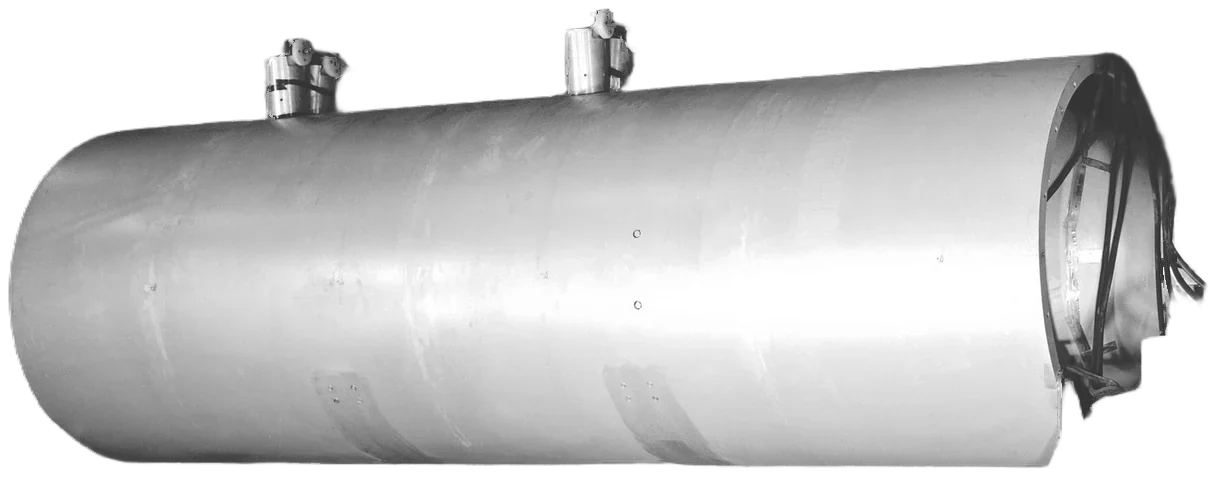
Technische Daten
- Bauart
- Thermonuklear (mehrstufig)
- Typ
- Versuchsgerät
- Masse
- 10,66 t
- Länge
- 4,56 m
- Durchmesser
- 1,37 m
- Gebaut
- 1
 Vereinigte Staaten
Überblick
The TX-21 "Shrimp", the first US test of a dry-fuel thermonuclear device using lithium deuteride, fired at Bikini Atoll on 1 March 1954. Expected to yield about 5 Mt, it produced 15 Mt, the largest explosion the United States has ever set off.
The designers had not foreseen that lithium-7 would also take part in the reactions. Fallout spread over more than 18,000 km² of the Pacific: people on Rongelap and Utirik suffered radiation sickness and were evacuated, and the 23 crew of the Japanese fishing boat Daigo Fukuryū Maru were contaminated; one of them died months later. The disaster fuelled worldwide calls to end atmospheric testing.
Wirkungsradien: Schätzungen
Berechnet für 15 Mt
- Feuerball, größter Radius
- ≈ 2,9 km
- Anfangsstrahlung, 500 rem (5 Sv)
- ≈ 5,2 km
- Druckwelle 5 psi: die meisten Gebäude stürzen ein
- ≈ 18 km
- Hitzestrahlung: Verbrennungen dritten Grades
- ≈ 35 km
- Druckwelle 1 psi: Fensterscheiben zerbersten
- ≈ 54 km
Geschätzte Bodenentfernungen für eine Luftdetonation in optimaler Höhe über flachem, offenem Gelände, aus der Sprengkraft mit den üblichen Skalierungsgesetzen berechnet. Es sind keine Messwerte: Die tatsächliche Wirkung hängt von Detonationshöhe, Gelände, Bebauung und Wetter ab.
Formeln nach: Glasstone & Dolan, The Effects of Nuclear Weapons (1977), chapter II; Carey Sublette, Nuclear Weapons FAQ, section 5
Tests und Einsatz
| Datum | Ereignis | Ort | Sprengkraft |
|---|---|---|---|
| 1. März 1954 | Castle BravoSurface shot on an artificial island off Namu; three times the expected yield. | Bikini Atoll, Marshall Islands | 15 Mt |
Testaufnahmen
Archivfilme auf YouTube. Erst wenn Sie auf Abspielen drücken, wird etwas von YouTube geladen; der Player kommt dann von youtube-nocookie.com.
Quellen
- Castle Bravo, Wikipedia