
 EN
 Русский
 Türkçe
 Français
 Deutsch
 Español
 العربية
Yield · TNT equivalent6–120 kt
Key specs
- Country
 United States
- Design
- Implosion fission
- Type
- Aircraft bomb
- Weight
- 1.4 t
- Length
- 3.3 m
- Diameter
- 1.11 m
- In service
- 1952–1963
- Number built
- 140
Overview
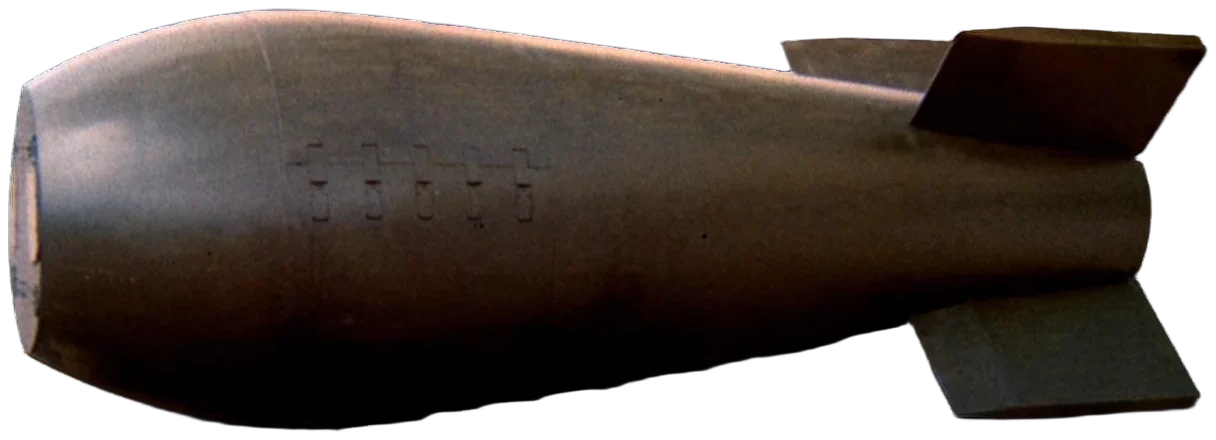
A much lighter implosion bomb than the Mk 4, with 92 explosive lenses instead of 32. It weighed about 1.4 tonnes and, depending on the core, gave 6 to 120 kt.
Effect radii: estimates
Calculated for 120 kt
- Fireball, maximum radius
- ≈ 410 m
- Initial radiation, 500 rem (5 Sv)
- ≈ 2.1 km
- Blast 5 psi: most buildings collapse
- ≈ 3.5 km
- Thermal: third-degree burns
- ≈ 4.8 km
- Blast 1 psi: windows shatter
- ≈ 11 km
Estimated ground ranges for an air burst at the optimum height over flat, open ground, computed from the yield with standard scaling laws. These are not measurements: real effects depend on the height of burst, terrain, buildings and weather.
Formulas from: Glasstone & Dolan, The Effects of Nuclear Weapons (1977), chapter II; Carey Sublette, Nuclear Weapons FAQ, section 5
Sources
- Complete List of All U.S. Nuclear Weapons, Nuclear Weapon Archive (Carey Sublette)
- Mark 5 nuclear bomb, Wikipedia