
 EN
 Русский
 Türkçe
 Français
 Deutsch
 Español
 العربية
Key specs
- Country
 United States
- Design
- Implosion fission
- Type
- Demolition charge
- Weight
- 68 kg
- Length
- 457 mm
- Diameter
- 305 mm
- In service
- 1963–1989
Overview
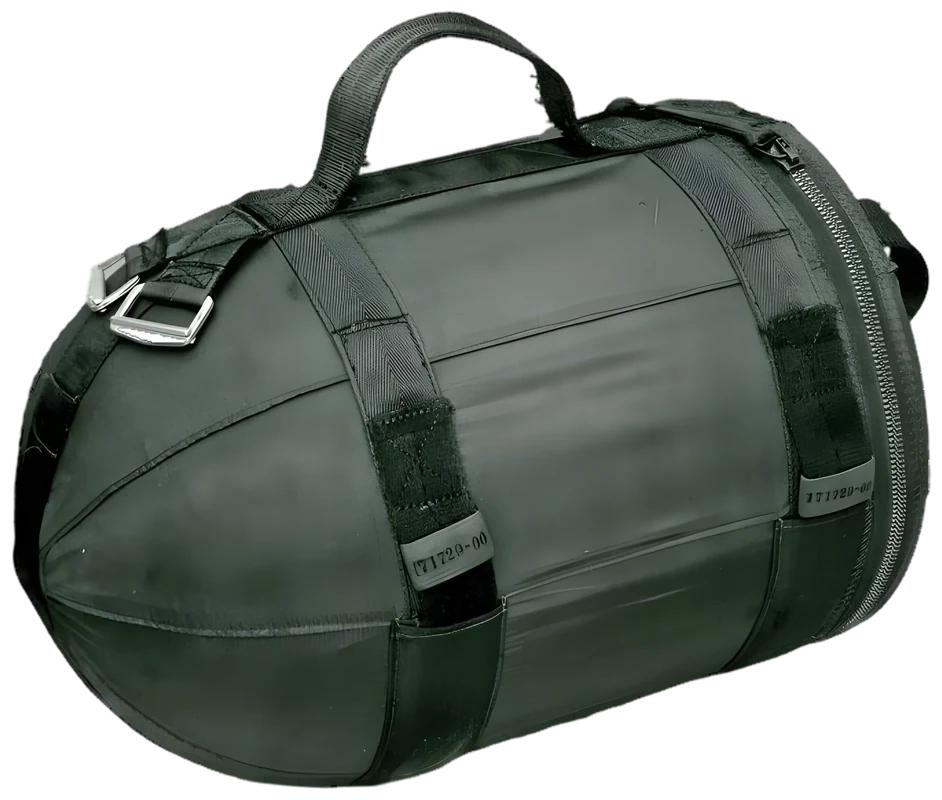
The Special Atomic Demolition Munition: a charge built around the W54, light enough for one soldier to carry in a pack, with a selectable yield from about 10 tons to 1 kt. Special Forces teams trained to place it by parachute, on foot or under water to destroy bridges, dams and mountain passes.
The first version entered production in April 1963, with improved models in 1964 and 1965. It was set off by a mechanical timer or by wire. Atomic demolition munitions were withdrawn by the end of the 1980s; none was ever used.
Effect radii: estimates
Calculated for 1 kt
- Fireball, maximum radius
- ≈ 61 m
- Thermal: third-degree burns
- ≈ 670 m
- Blast 5 psi: most buildings collapse
- ≈ 710 m
- Initial radiation, 500 rem (5 Sv)
- ≈ 840 m
- Blast 1 psi: windows shatter
- ≈ 2.2 km
Estimated ground ranges for an air burst at the optimum height over flat, open ground, computed from the yield with standard scaling laws. These are not measurements: real effects depend on the height of burst, terrain, buildings and weather.
Formulas from: Glasstone & Dolan, The Effects of Nuclear Weapons (1977), chapter II; Carey Sublette, Nuclear Weapons FAQ, section 5
Test footage
Archive films hosted on YouTube. Nothing loads from YouTube until you press play; the player then comes from youtube-nocookie.com.
Sources
- Complete List of All U.S. Nuclear Weapons, Nuclear Weapon Archive (Carey Sublette)
- Special Atomic Demolition Munition, Wikipedia