
 ES
 Русский
 Türkçe
 Français
 Deutsch
 العربية
Características
- País
 Reino Unido
- Diseño
- Fisión, tipo implosión
- Tipo
- Bomba de aviación
- Peso
- 4,5 t
- Longitud
- 7,3 m
- Diámetro
- 1,57 m
- En servicio
- 1953–1962
- Unidades fabricadas
- 58
Descripción
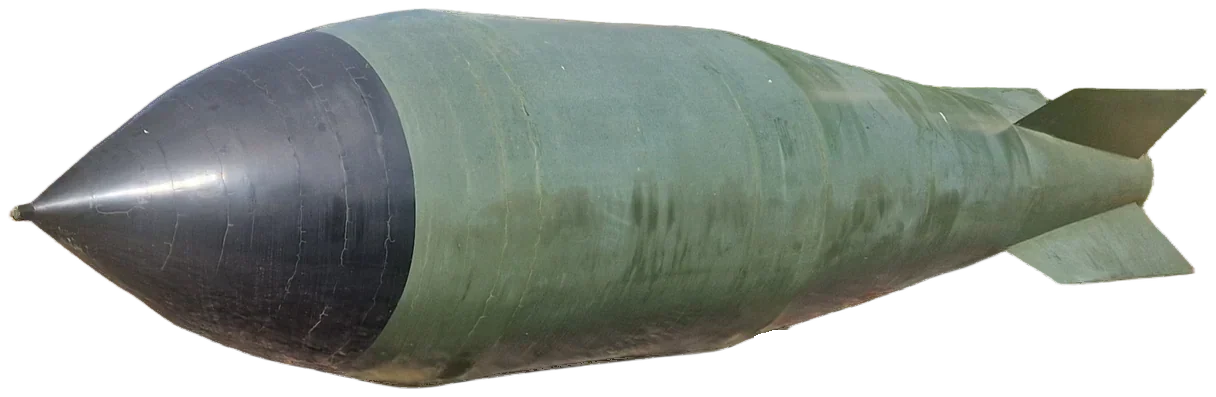
Britain's first operational atomic bomb: a plutonium implosion weapon of 10–12 kt for the V-bomber force, based on the device tested in Operation Hurricane in 1952. At about 4.5 tonnes and more than 7 m long, it filled the bomb bay of a Valiant.
The first bomb reached RAF Wittering in November 1953. In the Kite test of October 1956 a Valiant dropped one with a reduced yield over Maralinga in Australia, the first live drop of a British atomic bomb. 58 were built before production moved to the lighter Red Beard, and it left service around 1962.
Radios de efectos: estimaciones
Calculados para 12 kt
- Bola de fuego, radio máximo
- ≈ 160 m
- Radiación inicial, 500 rem (5 Sv)
- ≈ 1,3 km
- Onda expansiva 5 psi: se derrumban la mayoría de los edificios
- ≈ 1,6 km
- Radiación térmica: quemaduras de tercer grado
- ≈ 1,9 km
- Onda expansiva 1 psi: se rompen los cristales
- ≈ 5 km
Distancias sobre el terreno estimadas para una explosión aérea a la altura óptima sobre terreno llano y despejado, calculadas a partir de la potencia con las leyes de escala habituales. No son mediciones: los efectos reales dependen de la altura de la explosión, el relieve, los edificios y el tiempo.
Fórmulas según: Glasstone & Dolan, The Effects of Nuclear Weapons (1977), chapter II; Carey Sublette, Nuclear Weapons FAQ, section 5
Pruebas y uso
| Fecha | Suceso | Lugar | Potencia |
|---|---|---|---|
| 11 oct 1956 | Kite (Operation Buffalo)First live drop of a British atomic bomb, from a Valiant of No. 49 Squadron; yield deliberately reduced. | Maralinga, South Australia | 3 kt |
Fuentes
- Britain's Nuclear Weapons: From MAUD to Hurricane, Nuclear Weapon Archive (Carey Sublette)
- Blue Danube (nuclear weapon), Wikipedia