
 FR
 Русский
 Türkçe
 Deutsch
 Español
 العربية
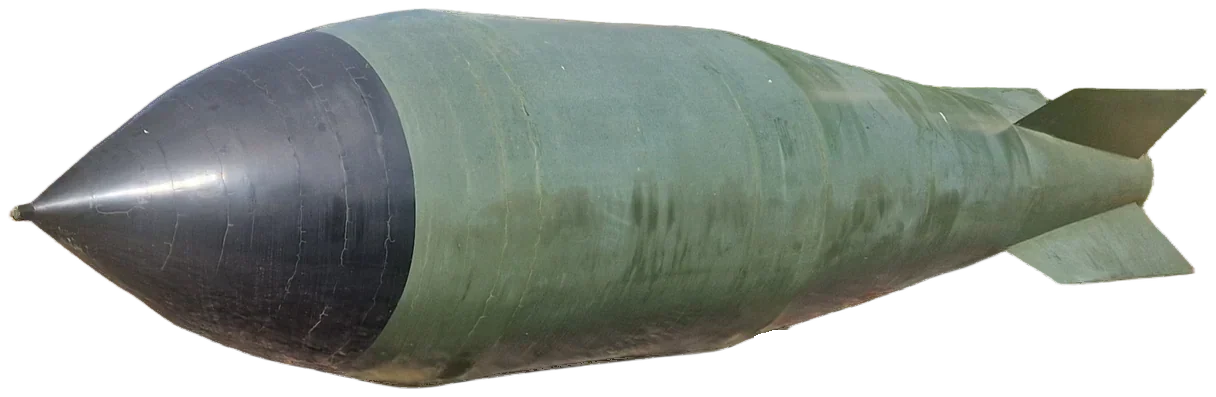
Caractéristiques
- Pays
 Royaume-Uni
- Principe
- Fission, type implosion
- Type
- Bombe d’aviation
- Masse
- 4,5 t
- Longueur
- 7,3 m
- Diamètre
- 1,57 m
- En service
- 1953–1962
- Exemplaires produits
- 58
Présentation
Britain's first operational atomic bomb: a plutonium implosion weapon of 10–12 kt for the V-bomber force, based on the device tested in Operation Hurricane in 1952. At about 4.5 tonnes and more than 7 m long, it filled the bomb bay of a Valiant.
The first bomb reached RAF Wittering in November 1953. In the Kite test of October 1956 a Valiant dropped one with a reduced yield over Maralinga in Australia, the first live drop of a British atomic bomb. 58 were built before production moved to the lighter Red Beard, and it left service around 1962.
Rayons d’effets : estimations
Calculés pour 12 kt
- Boule de feu, rayon maximal
- ≈ 160 m
- Rayonnement initial, 500 rem (5 Sv)
- ≈ 1,3 km
- Souffle 5 psi : la plupart des bâtiments s’effondrent
- ≈ 1,6 km
- Rayonnement thermique : brûlures du troisième degré
- ≈ 1,9 km
- Souffle 1 psi : vitres brisées
- ≈ 5 km
Distances au sol estimées pour une explosion aérienne à l’altitude optimale au-dessus d’un terrain plat et dégagé, calculées à partir de la puissance avec les lois d’échelle usuelles. Ce ne sont pas des mesures : les effets réels dépendent de l’altitude d’explosion, du relief, des bâtiments et de la météo.
Formules d’après: Glasstone & Dolan, The Effects of Nuclear Weapons (1977), chapter II; Carey Sublette, Nuclear Weapons FAQ, section 5
Essais et emploi
| Date | Événement | Lieu | Puissance |
|---|---|---|---|
| 11 oct. 1956 | Kite (Operation Buffalo)First live drop of a British atomic bomb, from a Valiant of No. 49 Squadron; yield deliberately reduced. | Maralinga, South Australia | 3 kt |
Sources
- Britain's Nuclear Weapons: From MAUD to Hurricane, Nuclear Weapon Archive (Carey Sublette)
- Blue Danube (nuclear weapon), Wikipedia